

Entity SEO for AI Search: How to Make Assistants Understand Your Brand
BY DZAN VOLODER, FOUNDERLAST UPDATED 7 MIN READ
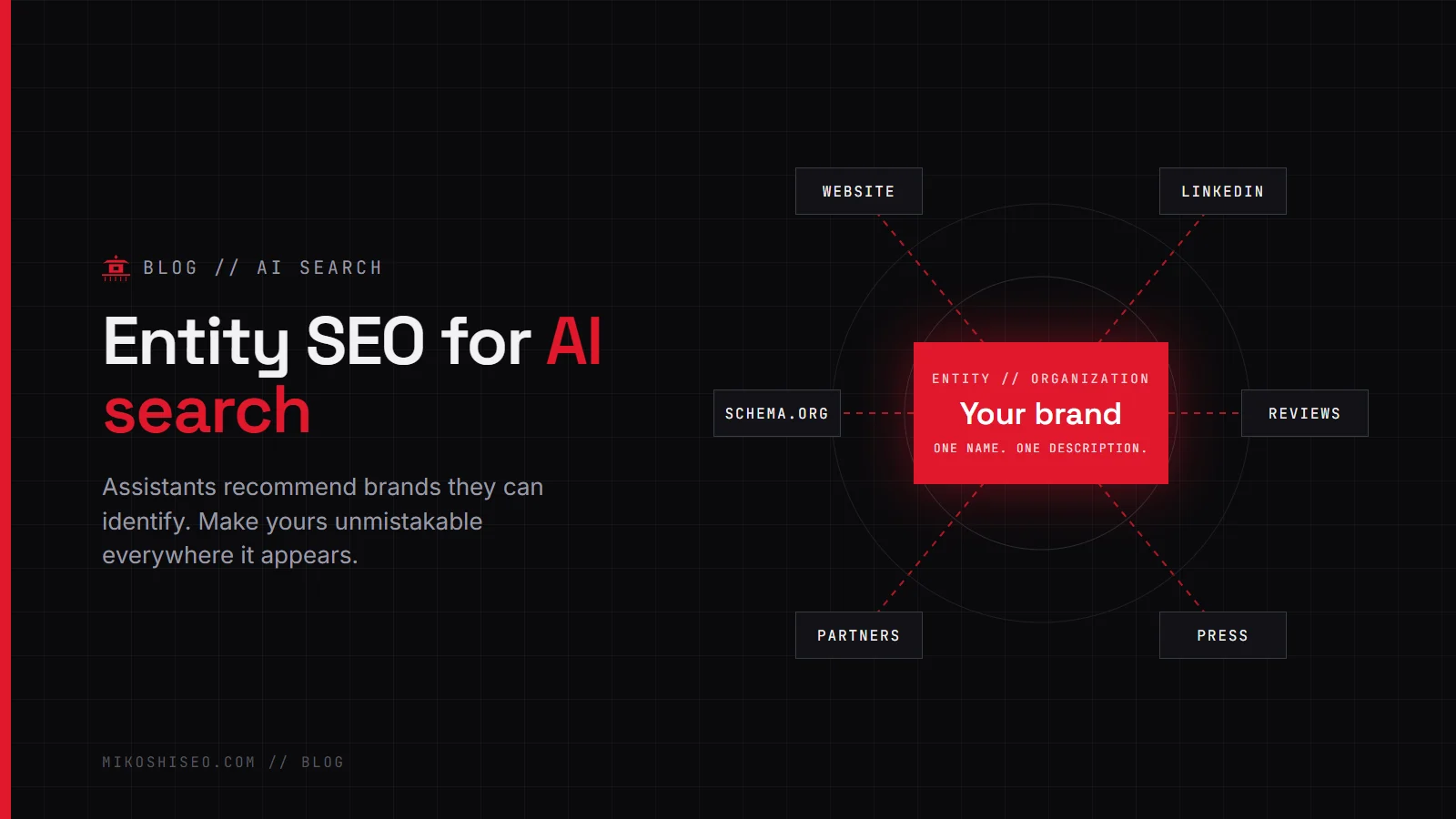
An AI assistant can only recommend a brand it can identify with confidence. Entity SEO makes that easy: one clear name and description, used the same way on your site and every profile, connected with Organization structured data and sameAs links, and confirmed by independent sources.
What an entity is, and why AI cares
An entity is a thing with a stable identity: a company, a person, a product. Search engines and AI assistants build their understanding of your company by joining up everything they read about it, from your website to review profiles, press coverage and partner pages.
When those sources disagree, assistants hedge, mix you up with similarly named companies or leave you out. Our own name is a good example: a mikoshi is also a Japanese festival shrine, so every profile we run states plainly that Mikoshi SEO is an SEO and AI search agency.
Step 1: write your entity statement
Write one sentence that says who you are, what category you are in, who you serve and where. Ours is: "Mikoshi SEO is an SEO and AI search agency for B2B companies in the US and Europe."
Use that sentence, word for word or very close to it, as the opening line of your home page, your about page, your LinkedIn company page and every directory profile. Repetition across sources is the point.
Step 2: make it consistent everywhere
- Home page and about page: the same name, category and description.
- LinkedIn company page and Google Business Profile.
- The two or three review or directory sites that rank for your category.
- Your press boilerplate and founder bios.
- Partner and integration listings that describe you.
Step 3: mark it up with Organization schema
Organization structured data states your name, logo, description and official profiles in a form machines read directly. The sameAs property is the key part: Google describes it as pages on other websites with more information about your organization, such as social or review profiles. Google recommends placing the markup on your home page or a page that describes your organization, and its guidelines require structured data to match what is visible on the page.
Here is a trimmed version of the markup on mikoshiseo.com:
{
  "@context": "https://schema.org",
  "@type": "Organization",
  "@id": "https://mikoshiseo.com/#org",
  "name": "Mikoshi SEO",
  "url": "https://mikoshiseo.com/",
  "logo": "https://mikoshiseo.com/assets/icon.png",
  "description": "SEO and AI search (GEO) agency for B2B companies.",
  "founder": { "@type": "Person", "name": "Dzan Voloder" },
  "areaServed": ["US", "Europe"],
  "sameAs": ["https://www.linkedin.com/company/mikoshi-seo"]
}
Every time you create an official profile, add its URL to sameAs. That list is how you tell machines which profiles really belong to you.
Step 4: earn independent confirmation
Your own site and profiles say who you are. Independent sources confirm it: reviews from real clients, articles that quote you, podcasts and events that introduce you, and partner pages that describe what you do. Assistants give more weight to a description many independent sources agree on than to one your own site repeats.
Step 5: check what assistants believe about you
- Ask each assistant "What is [your brand]?" and "Who are [your brand]'s competitors?"
- Note every wrong or outdated fact: category, location, services, founders, pricing.
- Trace each error to its source, usually an old profile or article, and correct it there.
- Run the same questions again each month, several times each, because answers vary between runs.