

AI SEO ROI: How to Measure the Return on SEO and AI Search
BY DZAN VOLODER, FOUNDERLAST UPDATED 7 MIN READ
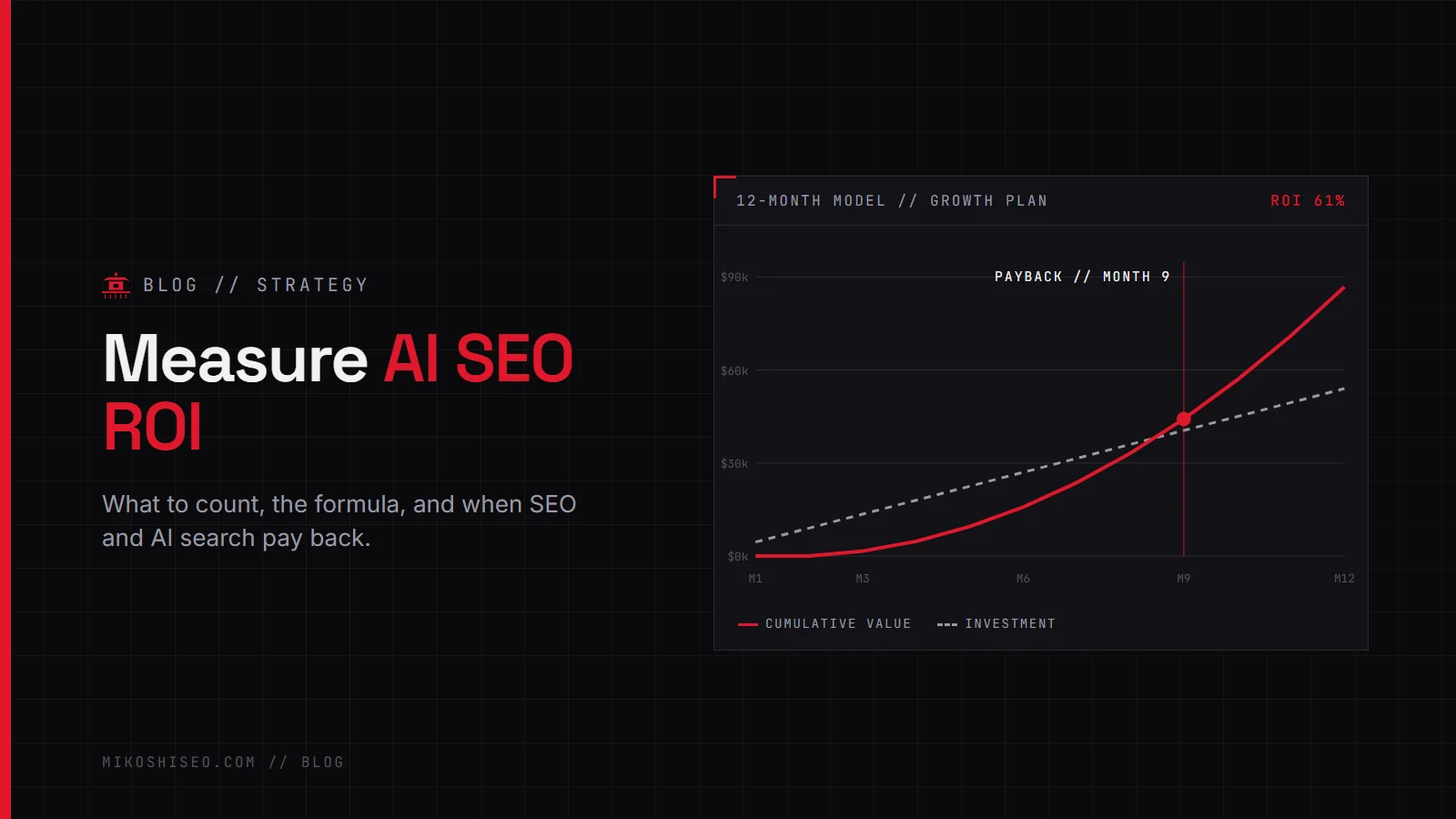
AI SEO ROI is the extra value your SEO and AI search program creates, minus its cost, divided by its cost. Count the extra organic and AI-referred leads and the customers they become, value them at first-year revenue, and compare that with the fees over the same period, usually 12 months.
The formula
The return on SEO and AI search follows the same logic as any marketing investment. The work is in counting the inputs honestly.
ROI (%)          = (extra value - investment) / investment x 100
extra value      = extra customers x first-year customer value
extra customers  = extra leads x close rate
extra leads      = extra organic visits x conversion rate
                 + AI-referred visits x conversion rate
What to count
- Extra non-branded organic visits. Growth above your baseline, from searches that do not include your brand name. Branded searches mostly reflect demand you already had.
- AI-referred visits. Visits from ChatGPT, Perplexity, Claude, Gemini and Copilot, tracked as their own channel in analytics.
- Leads and pipeline. Form fills, demo requests and calls from those visits, matched to opportunities in your CRM.
- Customer value. First-year revenue per new customer is the cautious choice. Lifetime value makes ROI look better but takes years to prove.
- The full investment. Agency or team fees, content and tools, over the same period as the value.
A worked example
Here is what our ROI calculator shows with its default inputs: 10,000 monthly organic sessions, a 1% visit-to-lead rate, a 10% close rate, a $10,000 first-year customer value, our Growth plan at $4,500 a month and the Expected scenario.
Over 12 months, the model estimates about $86,800 of extra value against $54,000 invested: an ROI of about 61%, with payback in month 9. With the same inputs and a smaller or larger site, the result changes a lot, which is why it is worth running your own numbers.
The attribution pitfalls
- AI assistant visits often arrive as Direct or Unassigned. Create an AI Assistants channel in GA4 so they are counted at all.
- Buyers who read an AI answer and then search your brand show up as branded search. Ask "how did you hear about us?" on your forms.
- B2B sales cycles are long. Report pipeline as well as closed revenue, or year-one ROI will look worse than it is.
- Compare against a baseline. Leads you would have won anyway are not part of the return.
When to expect payback
Expect very little in the first two months, while technical fixes and the first content ship. Results then build month by month as pages get indexed, rank and get cited. For B2B companies with high customer values, programs often pay back within the first year; small sites with little traffic usually take longer. Our calculator models exactly this ramp and shows the payback month.